
Most Schools Are Focusing on the Wrong Type of Parental Engagement
Most schools spend a great deal of time trying to improve parent and carer engagement.
They send newsletters, update websites, organise parents’ evenings, share information through apps and social media, and encourage families to attend school events.
Yet despite all this effort, many school leaders still ask the same question:
The answer may be that we’ve been focusing on the wrong type of engagement.
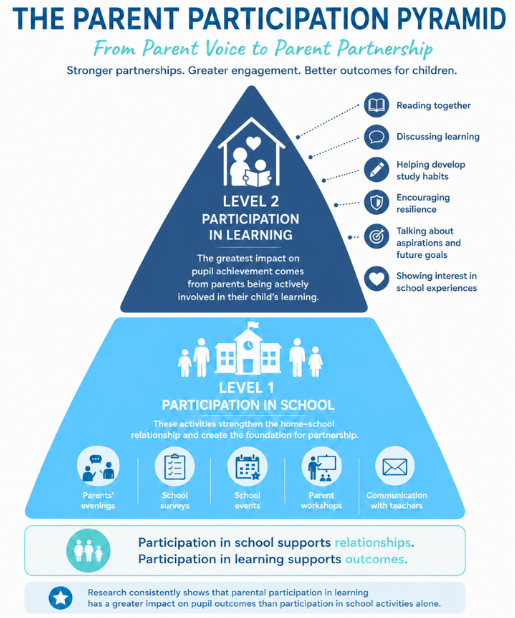
Research, including the work of Professor Janet Goodall of Swansea University, suggests that the most important form of parent and carer engagement is not attendance at school events, completing surveys or reading newsletters.
It is parental participation in learning.
In other words, the biggest difference is made when parents and carers actively support their child’s learning at home.
Families who discuss learning, encourage reading, celebrate achievement, support good study habits and talk about future aspirations can have a significant impact on educational outcomes.
So what can schools do? The answer is to focus on Level 2 activities.
1Focus on Learning, Not Just Communication
Many schools invest considerable time producing newsletters, emails and social media updates.
While communication is important, schools should also ask:
- Do parents and carers understand what their child is learning?
- Do they know how to support reading at home?
- Do they understand curriculum expectations?
The most effective parental engagement strategies help families become active partners in learning.
2Build Trust Before Seeking Feedback
Parents and carers are far more likely to engage when they feel their views are valued.
Trust develops when schools:
- Listen carefully
- Respond respectfully
- Follow through on commitments
- Communicate openly
Parental engagement is built on relationships, not transactions.
3Make Participation Easy
Families are busy.
Schools that make engagement simple tend to achieve better participation. This might include:
- Mobile-friendly surveys
- Short video messages from leaders
- Flexible opportunities to contribute
- Clear and accessible communications
Reducing barriers can significantly improve participation.
4Demonstrate That Feedback Leads to Action
One of the most effective ways to improve future participation is to show parents and carers that their feedback matters.
A simple ‘You Said – We Did’ approach can be incredibly powerful. When parents and carers see evidence that their views have led to improvements, they are far more likely to engage again in the future.
5Build a Culture of Partnership
The most successful schools create a culture where parents and carers know their views are:
Parental engagement should not be viewed as an occasional exercise or an inspection requirement. It should be an ongoing partnership focused on helping children succeed.
Schools often focus on increasing participation in surveys, events and meetings. These activities are valuable because they strengthen relationships.
However, the greatest impact on pupil outcomes comes when schools help families become active participants in learning.
A useful way to think about this is:
Find out more about parental engagement
Learn more about parental engagement and our services, including Ofsted Evidence.
Leave a Reply